
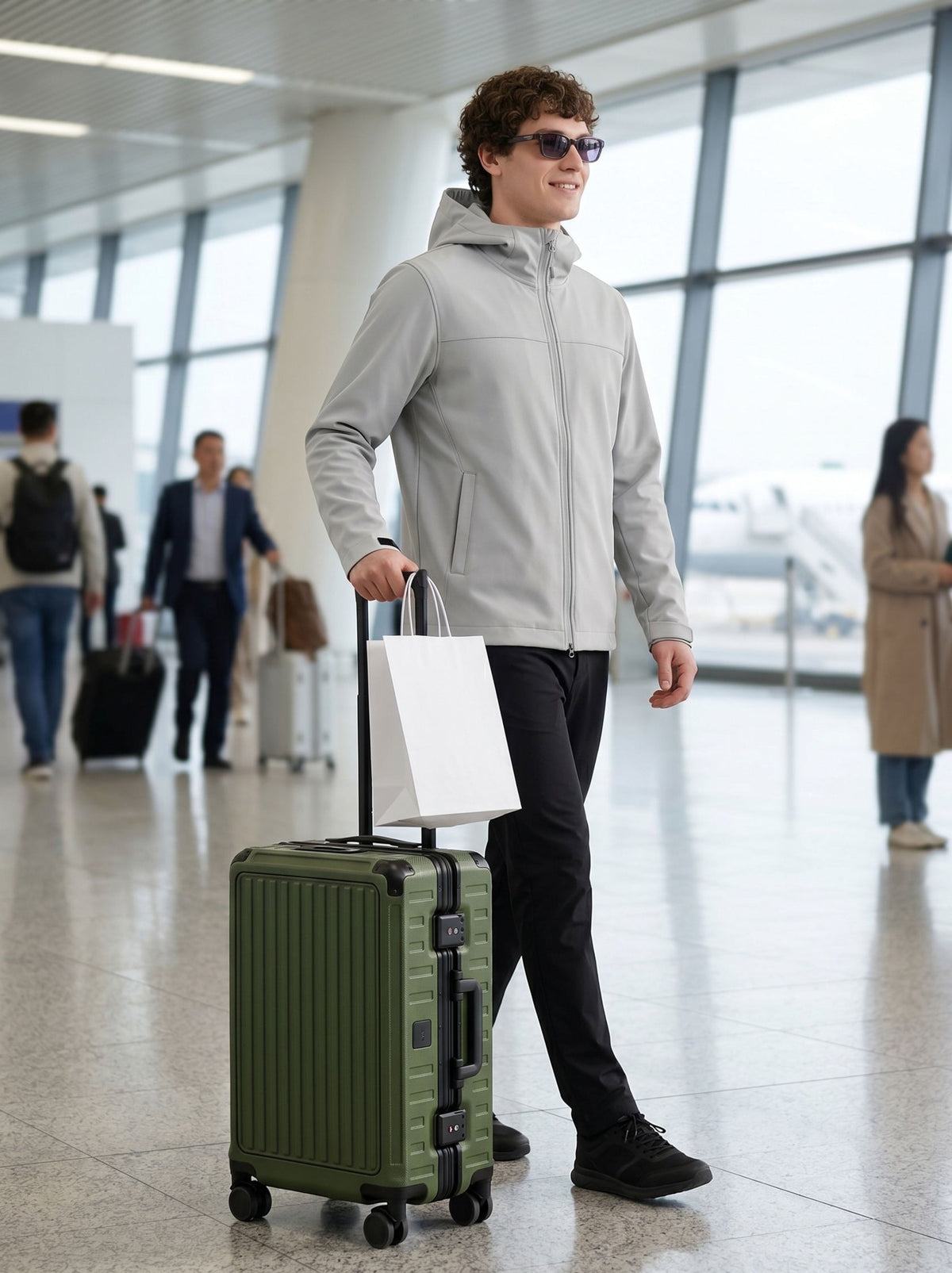
How to Get Through Airport Security Faster With a Front-Opening Carry-On
You reach the security checkpoint. Your laptop is buried under two shirts, a packing cube, and the jacket you swore you would wear on the plane.
Now the entire suitcase has to come open.
LUGGEX designs front-opening carry-ons for exactly this kind of travel friction: not to change airport security rules, but to make the things you control—access, organization, and repacking—much easier.
What Makes a Front-Opening Carry-On Different?
A traditional clamshell suitcase opens through the middle and usually needs to lie flat. That works well for packing, but it is less convenient when you need one item in a crowded airport.
A front-opening carry-on gives you a separate access point for frequently used essentials. Depending on the design, that may include a laptop, tablet, documents, or charging cables.
Instead of opening your packed clothing compartment, you can retrieve your device from the front.
Front-Opening vs. Traditional Carry-On
| Comparison | Front-Opening Carry-On | Traditional Carry-On |
|---|---|---|
| Laptop access | Quick front access | Open the main compartment |
| Opening space | Access while upright | Usually needs to lie flat |
| Best for | Business trips and laptop users | Travelers needing more packing space |
| Trade-off | Less interior capacity | Less convenient airport access |
Does It Actually Make Security Faster?
It can make your part of the process more efficient.
A front laptop compartment may help you:
-
Remove your device without unpacking your clothing
-
Keep electronics and cables together
-
Repack more quickly after screening
-
Avoid laying your suitcase fully open in public
However, it does not let you skip security procedures. Screening requirements can vary by airport, equipment, and security program. Always follow the instructions given by the officer at your checkpoint.
The LUGGEX Design Answer
The LUGGEX ZX All-in-One Carry-On combines a front-access laptop compartment with a zipperless aluminum frame, integrated TSA lock, spinner wheels, handle hook, and built-in cup holder.
The laptop compartment fits slim laptops up to 16 inches. A thick case or oversized laptop may not fit, so travelers should compare their laptop’s full exterior length, width, and thickness—not just its advertised screen size.
That distinction is important. A “16-inch laptop” describes the screen diagonal, not the actual dimensions of the computer.
The suitcase is also designed primarily for short business trips and long weekends. Travelers who need maximum clothing capacity may prefer a carry-on without a dedicated front compartment.
When Front Access Is Worth It
This design makes the most sense if you:
-
Travel with a laptop regularly
-
Work during layovers
-
Take frequent two- to four-day trips
-
Need quick access to documents and chargers
-
Prefer keeping electronics separate from clothing
It may be less useful if you rarely carry electronics or prioritize the lightest possible suitcase.
For a fuller comparison of access and packing styles, read our guide to front-opening vs. top-opening luggage.
A Better Airport Routine
Before entering the security line, remove loose items from your pockets and place your laptop, ID, and boarding pass where you can reach them easily. Keep liquids organized according to current security requirements and avoid overpacking the front compartment.
Good luggage cannot eliminate every airport delay. It can eliminate unnecessary digging.
That is the idea behind LUGGEX front-opening design: keep the items you use in transit within reach, while everything else stays packed.
Share:
Travel Safety Tips Every Tourist Should Know Before Their Next Trip
How to Reset Your Lock & Recover a Forgotten Combination