
A suitcase can survive years of travel.
Or one wheel can make the whole thing miserable after a single trip.
That doesn’t necessarily mean every broken wheel was poorly made—and it definitely doesn’t mean any luggage brand can promise its wheels will never fail.
At LUGGEX, we think the more useful question is:
Why are suitcase wheels under so much stress in the first place—and what should travelers check before flying?
Here’s what actually matters.
Why Wheels Are One of the Hardest-Working Parts of a Suitcase
Unlike the shell, suitcase wheels are constantly moving.
They roll across airport floors, sidewalks, parking garages, curbs, hotel lobbies and rough pavement. On checked luggage, they may also be exposed to impacts during baggage handling.
And because wheels extend beyond the body of the case, they can be more exposed than flatter parts of the suitcase.
That matters enough that major airlines distinguish ordinary wear on protruding parts such as wheels and handles from other types of baggage damage in their policies. American Airlines, for example, specifically notes normal wear and tear involving wheels and other external attachments among its liability limitations.
So when a traveler says, “My wheel broke on the first trip,” there isn’t one automatic explanation.
It could involve the wheel itself.
The housing.
The mounting point.
The load inside the suitcase.
Or an impact during handling.
That’s why the entire wheel assembly matters more than one marketing phrase.
1. Look Beyond “360° Spinner Wheels”
Most modern luggage has spinner wheels.
That tells you how the suitcase moves.
It doesn’t tell you how well the wheel system is built.
Before your first trip, roll the suitcase on all four wheels and pay attention to whether:
-
each wheel rotates freely,
-
one corner feels noticeably rougher than the others,
-
the wheel housing feels secure,
-
there is unusual wobble,
-
or the suitcase consistently pulls to one side.
Some movement in a wheel assembly can be normal.
What you’re looking for is a clear difference between one wheel and the rest.
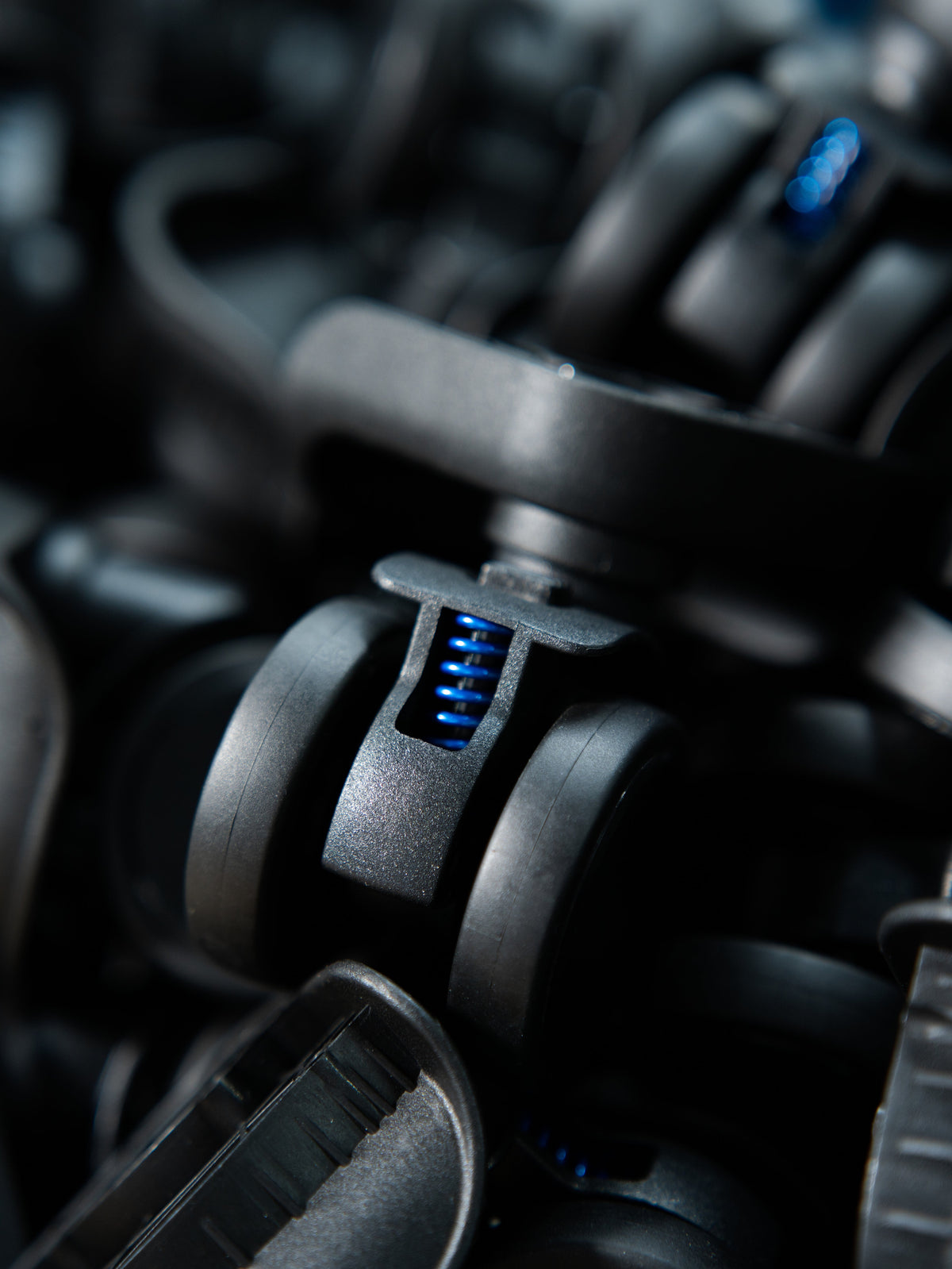
Current LUGGEX ZX luggage uses shock-absorbing spinner-wheel systems designed to help cushion vibration during movement. That is a specific design feature—not a promise that a wheel can never be damaged.

That distinction is important.
2. Remember That Checked Bags Live a Different Life
Carry-on luggage usually stays much closer to you.
Checked luggage doesn’t.
Once you hand it over, the suitcase moves through conveyor systems, carts, loading equipment and multiple handoffs before returning at baggage claim.
That doesn’t mean baggage handlers are automatically responsible every time something breaks.
But it does mean checked luggage experiences a different type of travel from the suitcase you roll straight onto the plane.
The more a component projects from the case—wheels, handles, hooks or other attachments—the more important its connection to the main body becomes.
So when comparing checked luggage, don’t only inspect the wheel itself.
Look at where the wheel assembly meets the suitcase.
3. More Packing Weight Means More Work for the Wheels
A bigger suitcase gives you more room.
That also makes it easier to add more weight.
Every extra pair of shoes, coat, toiletry bag and souvenir eventually has to move through the wheel system.
That doesn’t mean a heavy suitcase automatically damages its wheels.
It means the forces involved increase as the packed load increases.
This is another reason not to treat capacity as free space with no trade-off.
A 100L suitcase invites very different packing behavior from a small carry-on.
Before leaving home, weigh the suitcase fully packed—not empty.
4. Check the Wheels Before You Leave
A simple pre-trip inspection can save you from discovering a problem at the airport.
With the suitcase packed to a realistic weight:
Roll it forward and backward.
Make several tight turns.
Push it sideways on all four wheels.
Lift each corner and rotate the wheel by hand.
Check the wheel housing for anything visibly loose or uneven.
Then repeat the same check after the trip.
That gives you a before-and-after reference instead of trying to remember whether a wheel “always felt like that.”
5. If a Wheel Is Damaged After a Flight, Document It Quickly
If you notice obvious damage after collecting checked baggage, don’t automatically wait until you get home.
Airline reporting windows can be short.
American currently advises passengers with damaged bags to report the issue before leaving the airport or, for U.S. trips, within six hours of receiving the bag. Delta similarly tells customers to report damage promptly and currently lists six hours for domestic tickets and seven days for international tickets. Policies and eligibility vary, so always check the airline that actually operated your flight.
A good habit is to photograph:
-
the damaged wheel,
-
the complete suitcase,
-
the baggage tag,
-
and any visible impact around the wheel housing.
Then determine whether the next step belongs with the airline, the luggage brand, or both.
6. Airline Damage and Product Warranty Are Not the Same Thing
This distinction matters.
If a wheel develops a qualifying manufacturing or functional defect under normal use, that may be a product-warranty issue.
If the suitcase is visibly damaged during airline handling, that may instead be an airline baggage claim.
For eligible ZX luggage purchased directly from LUGGEX.com, the current Lifetime Limited Warranty applies subject to its coverage terms and exclusions.
It does not mean every damaged wheel is automatically covered.
That’s why identifying how the damage happened matters.
Read the LUGGEX Warranty Policy
So, Why Do Suitcase Wheels Break?
There isn’t one universal reason.
Wheel failures can involve:
repeated vibration,
heavy loads,
impact,
wear,
the wheel housing,
or the attachment point itself.
That’s also why the best buying question isn’t:
“Are these wheels indestructible?”
No responsible luggage company should promise that.
Ask instead:
“How is the wheel system built, how does it behave under a realistic packed load, and what support exists if something goes wrong?”
That tells you much more.
If you want to go deeper into the other high-stress parts of a suitcase, read:
What Makes a Suitcase Durable? A Guide to Wheels, Handles, and Frames
And if you’re comparing luggage construction:
Zipperless vs. Zipper Luggage: Which Is Better?
LUGGEX. Make It Epic.
Share:
What Makes a Suitcase Durable? A Guide to Wheels, Handles, and Frames
The Checked-Luggage Trade-Off: How to Balance Weight, Space, and Airline Fit